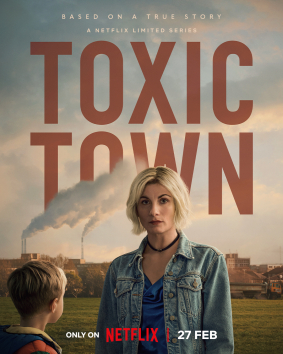
Toxic Town: How Corby's Toxic Dust Led to Children's Birth Defects
The quiet English town of Corby became the epicenter of an environmental tragedy, a story so compelling and harrowing that it captivated the nation and eventually inspired the Netflix drama Toxic Town. This isn't merely a fictionalized narrative; it's a stark portrayal of a real-life poisoning scandal where negligent toxic waste management led to devastating consequences: a cluster of children born with severe birth defects, including missing limbs and other physical abnormalities.
The events in Corby represent a landmark moment in environmental justice, highlighting the critical importance of corporate responsibility and the unwavering determination of ordinary citizens to fight for what's right. It was a case that set a powerful precedent, proving that the mismanagement of hazardous materials could indeed be directly linked to profound human suffering.
The Unfolding Tragedy: Corby's Environmental Scandal
For decades, Corby was synonymous with its thriving steel industry. However, when the British Steel plant closed in the 1980s, it left behind a monumental clean-up challenge. The process of decontaminating the vast site, particularly a quarry land, involved handling and moving colossal amounts of industrial waste and residues. What should have been a carefully managed environmental remediation project tragically became a source of widespread contamination.
During the clean-up, toxic dust, laden with heavy metals and harmful chemicals, was allowed to disperse freely into the air, carried by the winds across residential areas. Residents of Corby, unknowingly, inhaled this dangerous particulate matter as they went about their daily lives. The air, often visibly orange, became a silent carrier of peril, depositing its toxic payload onto homes, gardens, and ultimately, into the lungs of the community.
From Steelworks to Scrap Heap: The Source of the Dust
The former British Steel site, particularly a large quarry that had been used for waste disposal, was found to contain alarming levels of substances like arsenic, zinc, boron, and nickel. These concentrations far exceeded established environmental safety guidelines, even after attempts at clean-up. The sheer scale of the operation and, crucially, the alleged negligence in containing the hazardous dust during remediation efforts created an insidious threat that lingered in the atmosphere for years.
The irony was bitter: a town built on industry, now found itself poisoned by its remnants. The lack of proper safety protocols, inadequate monitoring, and a seemingly cavalier attitude towards the health implications of disturbing such a vast toxic legacy laid the groundwork for the disaster that would soon unfold.
A Cluster of Concerns: Mothers Demand Answers
In the late 1990s, an alarming pattern began to emerge in Corby. Mothers, one by one, gave birth to children with severe birth defects, particularly limb deformities such as missing fingers or hands. Initially, these instances might have been dismissed as isolated tragedies, but as more and more families faced similar heartbreaking diagnoses, a chilling suspicion began to grow: was there a connection?
The Netflix series Toxic Town vividly portrays this dawning realization, showing mothers like Susan McIntyre, played by Jodie Whittaker, recognizing a shared horror. McIntyre herself gave birth to a son with a deformed hand, and a chance encounter with another mother whose child had a similar defect sparked her suspicions. These mothers, facing unimaginable pain and uncertainty, instinctively felt that their individual tragedies were part of a larger, systemic problem.
The Power of the Press: Unearthing the Truth
The turning point arrived in 1999 when journalist Graham Hind, acting on a tip, began investigating the decontamination issues at the former steelworks and the cluster of birth defects in Corby. His subsequent article in the Sunday Times, co-written with Stephen Bevan, was the "spark that lit the fire." The report explicitly linked the children's limb deformities to mothers living or working near the toxic landfill sites associated with the former steel plant.
This exposé brought the whispered fears of the mothers into the public domain and provided the crucial information they needed to unite. The article, which initially identified four cases, prompted mothers to come forward, leading to 19 families eventually signing onto a groundbreaking class-action lawsuit. Pediatrician John Scott, who had contributed to studies linking birth defects to landfill sites, described the Corby cluster as "an early warning that something may be going wrong," validating the mothers' deep-seated concerns. Learn more about how their fight unfolded in Corby's Landmark Case: Mothers Who Fought Toxic Waste & Won Justice.
A Landmark Legal Battle: Justice for Corby's Children
The legal battle that ensued was arduous, stretching over a decade. The mothers of Corby, led by figures like Susan McIntyre, took on the powerful Corby Borough Council. They sought not only recognition for their children's suffering but also accountability and reparations for what they believed was negligent management of toxic waste. This was not just about monetary compensation; it was about establishing a critical principle: that environmental negligence has tangible, devastating human consequences.
In 2009, a civil court in England delivered a historic ruling. For the very first time, an English court officially made the connection between birth defects and the negligent management of toxic waste in the air. This landmark decision, often dubbed the "British Erin Brockovich" case, affirmed the mothers' claims and provided vindication for their long and painful struggle. It proved that their children's disabilities were not tragic anomalies but directly attributable to the environmental poisoning of their community.
The Legacy of the Corby Case
The Corby case resonated far beyond the town's borders. It set a crucial legal precedent, empowering communities affected by environmental pollution to seek justice. It underscored the profound impact that industrial activities and their clean-up can have on public health, especially on the most vulnerable members of society. The courage and perseverance of the Corby mothers became an inspiring example of citizen activism, demonstrating that collective action can challenge powerful institutions and bring about meaningful change. For a deeper dive into the full scope of this incident, read The True Story of Toxic Town: Unraveling Corby's Poisoning Scandal.
What Can We Learn from Corby? Safeguarding Our Communities
The story of Corby, and its portrayal in Toxic Town, serves as a powerful reminder of several critical lessons:
- Vigilance is Key: Communities must remain vigilant about industrial activities and waste management within their proximity. If something feels amiss, it often is.
- The Power of Collective Action: The Corby mothers' success was born from their unity. When faced with environmental threats, organizing and presenting a united front can be incredibly effective.
- Support Investigative Journalism: Journalists like Graham Hind played an indispensable role in bringing the Corby truth to light. Supporting independent, investigative journalism is vital for uncovering hidden dangers.
- Demand Transparency and Accountability: Local councils and corporations have a responsibility to be transparent about potential environmental hazards and must be held accountable for negligent practices. Citizens have a right to access information about local environmental quality.
- Strengthen Environmental Regulations: The Corby case highlighted gaps in environmental protection. Continuous review and strengthening of regulations, alongside robust enforcement, are crucial to prevent future tragedies.
- Understand Your Rights: In cases of suspected environmental harm, understanding legal avenues for redress and seeking expert advice early on can be crucial.
The human cost of environmental negligence in Corby was immeasurable, etched into the lives of families forever changed. Yet, from this immense suffering emerged a powerful testament to resilience and the enduring fight for justice. The mothers of Corby not only secured recognition for their children but also illuminated a path for future communities to stand up against environmental injustice, ensuring that lessons learned from this "Toxic Town" are never forgotten.